Danny is one of our TEFL experts. He has taught in Italy, Japan, Poland and at a esl summer school in the UK, so it’s safe to say he knows his stuff. Summer schools are a great option to ease yourself in to teaching English as a second language, but positions are competitive, so it’s worth knowing how to apply for a summer school TEFL job; something which Danny will be helping you with…!
Author: Student Support
We’re here to help!
We know times are tough at the moment and, with the cost of living rising all the time, it might seem like your TEFL dreams are getting more and more out of reach. We are determined that you shouldn’t have to miss out on an amazing new teaching adventure just because of the economic environment, so we’ve put certain things in place to help you get there.
We’re all about living the dream (and making it easier to do so!)
So, what have we done? Keep reading to find out…
1. Affordable payment plans
First off, we’ve made our most comprehensive courses more affordable with ‘Spread-the-cost’ payment plans.
With our 420-hour, 500-hour and Trinity CertTESOL courses, this means you can enrol with a low deposit and split the remaining cost of the course into affordable monthly payments. For full details of the payment plans, and how many months you can spread the cost over, check out the 500-hour course webpage, the 420-hour course webpage, or the Trinity CertTESOL webpage.
We’ve also applied payment plans to our TEFL Internships, so our supported way of exploring brand new destinations is more affordable for you all. You can now book onto one of our paid internships with a low deposit, and then split the remaining cost of the internship into monthly payments over 6 months.
With affordable payment plans you’ll be able to incorporate the cost of a TEFL course or internship into your monthly finances more easily, and won’t have to save up before you can start studying. That means fewer barriers to getting qualified, which means you’ll be earning good money as a TEFL Teacher a lot sooner than planned. Great news!

2. Earn while you study
With our 420-hour and 500-hour qualifications, we’ve arranged it so that you’ll receive a certificate once you pass the first 180-hour module of your course. Once you have this, you’ll be able to start working online as a TEFL teacher. This means you can start earning, and topping up your existing income, while you’re still studying. The perfect way to offset an increased cost of living! You’ll also be able to increase your wage as your qualification level increases, so you’ll be able to see the benefits of your hard work.
Another benefit? It will be a much easier transition from part-time to full-time TEFL work (if that’s what you’re looking for) once you graduate, as you’ll already have students on your books. Want to teach English abroad once you’ve finished your course? Then you’ll have some great TEFL experience already on your CV to impress potential employers – win, win, win!
To find out more, and discover how much you could be making at each stage of your studies, check out our 420-hour TEFL career roadmap or our 500-hour TEFL career roadmap.

3. Free TEFL resources
We’ve also put together a free TEFL Starter Kit for you, as we know resources for classes can be expensive or complicated to find and we want to give you a head-start. (Let’s face it not many of us are getting those at the moment, so every little helps!) It will also help you to be organised with your lessons and bring the fun to your classroom (whether online or in-person), so your students are happy and keep coming back – which means you’ll have happy students, happy employers, and a dependable income!
The starter kit contains handy things like:
- Flashcards
- Weekly and daily planners
- Rewards charts
- Online teaching backgrounds
- Certificates of achievement (for your students)
And much more! Get yours today – TEFL Starter Kit.

Want to speak to someone about your options? Arrange for a free call back and one of our friendly TEFL team members will be in touch to help you get started.
Would you prefer to read the information for yourself? No worries! Get your free TEFL brochure to find out more about your course and internship options.
Ready to look for TEFL jobs? Head to the LoveTEFL Jobs board. And, don’t forget, we’ve got some great resources on our blog to help you out with your job applications, including how to create the perfect TEFL CV/resume.
We really are here for you every step of the way, so please don’t hesitate to reach out when you need help. We want to see you succeed and, hopefully, the things we’ve put in place will make those TEFL dreams even more achievable for you.
Adventure awaits!
Springtime in South-East Asia – The Arrival of the Cherry Blossoms!
It’s March, which can only mean one thing in South-East Asia – the arrival of the famous cherry blossoms! Each year, with the coming of spring, countries like Japan and South Korea receive a gorgeous gift of the ‘en masse’ blooming of their cherry blossom trees. The colours of the flowers range from white to deep pink and they are an impressive sight to behold!
So, why should you be interested in a flowering tree? Well, the obvious reason is the fact that they look absolutely stunning and you can spend days just marvelling at their beauty (while getting some great photos for your Instagram). Another main reason is that they bring with them lots of fun and interesting traditions and festivals for you to enjoy. So, there’s never been a better time to head over to South-East Asia!
Japan

The most well-known for being a cherry blossom hotspot, Japan even has the cherry blossom (‘sakura’ in Japanese) as its national flower!
Cherry blossoms also have symbolic meaning in Japan, where they are considered representative of the transient and fleeting nature of life, a reminder of mortality, and a reminder of the fact that you should gracefully accept your destiny. This is because the cherry blossom flowers are only in full bloom for a very short time each spring, usually only a few weeks at the end of March and beginning of April.
Because of its importance, you’ll find the cherry blossom symbol everywhere in Japan. From traditional tattoo art and kimonos to stationery and sports teams!
‘Hanami’ is the Japanese word given to the tradition of going to view the cherry blossoms. It’s a tradition which dates back over 1000 years and is an important event in Japanese culture. It’s usually celebrated by sitting under cherry blossom trees in public spaces (usually parks), having a picnic with family and friends, and drinking saké (a Japanese alcohol made from fermented rice). Be warned, you might have to get up early in the morning to get a good picnic spot, as it can get quite competitive and busy later in the day!
It’s also important to note that the cherry blossom celebrations don’t all happen at the same time in Japan, as they bloom at different times of the year in different parts of the country. Cherry blossom festivals usually start around March time and end in May, so now is a great time to go to catch them!
Want to find a TEFL role in Japan so you can get out there and experience the magic of the cherry blossoms this spring? Head to the LoveTEFL jobs board to check out the latest vacancies.
Need to get qualified first? Take our quick course quiz to find out which TEFL course is your perfect match!
South Korea

Another great place to see some amazing cherry blossoms (‘beot-kkot’ in Korean) is South Korea. They go all-out with their festivals, with each location having their own version, so you’ll have loads to choose from. There is even have a cherry blossom marathon in Gyeongju!
Of all the festivities, the Seoul Yeouido Cherry Blossom Festival, which takes place in the park alongside the Han river, is arguably the most famous one in South Korea. It involves lively street performers, delicious food stalls, and arts and crafts exhibits, as well as prime viewing of around 1,500 gorgeous cherry blossom trees. Definitely not a sight to be missed!
As they do in Japan, the cherry blossoms also have symbolic meaning in South Korea, but the meaning is quite different! For Koreans they are seen as a symbol of purity and beauty. They have also been used in Korean pop culture (such as K-dramas) to represent true love.
Want to get out there and see them for yourself? And maybe fall in love (probably with South Korea!) as the cherry blossoms start to fall? Then check out our amazing Paid South Korea Internship – a fully supported way of getting a well-paid TEFL position in this beautiful country.

i-to-i’s Promises
Want some assurances before you decide to part with your hard-earned cash and book a TEFL course? We don’t blame you! That’s why we’ve created 3 iron-clad promises, so you know you can trust us to not only help you get TEFL qualified, but to see you all the way through to your job applications and interviews, so you can start earning, and teaching, as soon as possible.
First off, a bit of background about i-to-i…We have over 210,000 graduates as we’ve been delivering TEFL courses to people from all over the world for a VERY long time. Since 1994! So we’ve seen it all and have a lot of TEFL knowledge at our backs. This means we’ve been able to make sure our courses are as comprehensive as possible, so that they properly prepare you for your entry into the wonderful world of TEFL.
Now we’ve covered our history and experience, what are these promises we’re going to make to you, so you know that we’re serious about getting you TEFL qualified and earning as a TEFL teacher? Read on to find out!
Our 3 promises to you:
1. Continuous Academic Support
Our secret weapon, and the reason we have a 99% pass rate on our courses, is our Academic Support Team. They are a group of highly qualified and experienced TEFL teaching and TEFL course professionals, who will provide you with academic support for the duration of your course. This means they will be there to answer any queries you might have about the subject matter of the course, or questions you have about feedback you receive on your assignments. They can also help to motivate you when you’re struggling, so you can pass your course with flying colours and get your TEFL certification in no time! And, as if that wasn’t enough, we’ve also got a brilliant Customer Support Team backing them up. This friendly bunch will be able to assist you with any technology issues you might have with the course. They’ve heard it all and they are absolute experts at what they do, so they’ll have it sorted for you in a flash! You’re in super safe hands with these experienced teams.
2. Personal Jobs Advice
In addition to all the support you receive during your course, we also have a Jobs Support Team on hand to assist you once you’ve passed and are ready to find a TEFL job! They can help by providing expert advice for every stage of your job application, from building the perfect TEFL CV/resume and writing a successful cover letter, to creating effective introductory videos and perfecting your interview skills. They are pros when it comes to TEFL jobs and they will make sure you have the best possible chance of landing your dream TEFL role!
3. Lifetime membership to our Jobs Board
And we won’t just be there for your first TEFL role! This promise shows you that we will be happy to support you, as a graduate, throughout your entire TEFL career. With your lifetime membership to our jobs board, you will benefit from the fact that we are linked to hundreds of reputable employers throughout the globe, and you’ll be able to keep finding the perfect TEFL role for your needs. So, if you want to start off teaching English online from your own home, but in a couple of years time you decide you want to jet off and teach English in a classroom abroad, that’s OK! We’ll still be there to support you! We want to be able to help you find the right TEFL job at every stage of your career, and the lifetime membership to our jobs board demonstrates our commitment to that.

Ready to get started? We’re glad to hear it! Visit our TEFL courses page, or take our quick course matching quiz to find out which is the right one for you. Want some extra help? Arrange for a free callback with one of our TEFL Experts, who will be happy to assist you!
We look forward to supporting you on your TEFL journey!
TEFL Love Stories from Around the World
TEFL can change your life in so many ways: not just in terms of gaining independence and confidence by moving somewhere new, but it can always really change your love life for the better – just check out these TEFL love stories from around the world!
Every once in a while the wonderful world of TEFL brings people together – just like Jennifer.
Jennifer in South Korea
‘Here I am one year later, and I can honestly say coming to Korea was the BEST decision I have ever made. I can 100% say that I love my job. My co-teachers and my students are all wonderful. I feel very lucky. I’ve made some amazing life-long friends here, I’ve seen some amazing sites, and I met my wonderful boyfriend’.
The best bit? The TEFL journey is far from over. After South Korea the pair of them are making plans for Australia, Argentina or the Middle East!
Going with love
Who said you had to teach English abroad alone? Why take the leap with two feet when you can take it with four?! Over the past year loads of you have started your TEFL adventure with your other half. TEFL teacher Sam for instance, alongside his girlfriend, made the move to Zhuhai in China where they taught for 6 months in a kindergarten, back in May 2012.
Meanwhile, TEFL teacher Jenny and her boyfriend decided to start their own adventure by moving to South Korea, so it’s entirely possible!
Taking up teaching to be closer to their loved ones
Not trying to blow our own trumpet (honest!) but Kevin’s and James’ TEFL love stories just prove how versatile TEFL can be:
Kevin: When the job market took a nose-dive in Ireland, Kevin decided to take up TEFL and move to his wife’s native Argentina… permanently. When asked about what attracted him to Argentina, Kevin replied:
“My wife, the sun, the politics, the fact we could have a family waiting for us, for our baby to be part of and my own interest in other countries, languages, English especially as I am writer of poetry, stories, novels lately and plays and find I have a natural bent for teaching and enjoy it. The school term starts in March here so I am teaching individuals, adults with great success judging from their individual development.”
James: The last one on our TEFL Love Story special is a personal favourite and is one of the most inspirational stories of the year! James was enjoying the prospecting of married life in Ireland when things took an unexpected turn.
“I was finishing my Chartered Accountancy exams and I was getting married on the 15th of April. Life was really good and I had just bought a new apartment in Belfast; I had a secure job and I was looking forward to ‘the quiet life’. Then, the week before the wedding, my fiancé received an email from the Paris subsidiary of her company, asking if she would be interested in interviewing for a position they had available…”
It’s safe to say things got a bit more adventurous for James and his fiancé after that! Want to start your own TEFL Lover Story? Get qualified as a TEFL Teacher and travel the world for love, learning, and adventure!
Fall in Love with TEFL
Looking for love this Valentine’s Day? Well, just call us Cupid because we’re going to help you fall in love….with TEFL!
Forget swiping on apps, we have your Prince/Princess Charming right here!
Why is TEFL your perfect match?
Let us count the ways….
- It will improve your confidence and make you feel good about yourself (like every good relationship should!)
- You can travel the world and experience loads of amazing things together. Including (but not limited to) fascinating cultures and traditions, delicious foods, and beautiful sights!
- It will make you an even better version of yourself, as you’ll be making a real difference to people’s lives (and every good partner should bring out the best in you!)
- You can fit it around your existing commitments (it won’t get needy and clingy and demand ALL of your time, like some people might…)
- It will introduce you to new people, so you can make loads of new friends for life!
- Together you can earn a good wage, which means more money to spend on the things you enjoy
- It will never leave you! Once you’ve got TEFL, you’ve got it for life (security AND excitement? Sign us up!)
All this means you + TEFL = a Power Couple, if ever we’ve seen one.

And why should you trust our match-making skills?
Because we love happily ever afters! And because…
- We’ve been around TEFL for over 28 years! So we know everything there is to know about it and can help make it the best experience for you
- We have specialised support teams of match-makers and problem-solvers (aka TEFL Experts, Customer Support, Academic Support, and highly qualified tutors) that will be here with you every step of your journey, to make sure you have the best chance of success. Think of them like relationship therapists!
- We’re regulated by Ofqual, part of the UK-Government, and accredited by Gatehouse (which makes our match-making skills very official!)
- We work exclusively online, so you don’t have to worry about attending anything in person and can go at your own pace
Ready to be swept off your feet and fall in love with TEFL? Head to our courses page to get started, or arrange for a free call back from one of our friendly advisors, who will be only too happy to help set you up!
TEFL Teachers Finding Love!
Happy Valentine’s Day!
Whether you’ve got a romantic day with your significant other planned or are going to paint the town red with a group of friends, Valentine’s Day reminds us to think about the people, who are important to us in life.
When you’re teaching English abroad, you’re going to meet a lot of different people from all over the world and Cupid has the habit of striking when you least expect it.

For TEFL teachers, romance whilst travelling can be confusing, as sometimes there are fears that this falls into the “holiday romance” stereotype or fears over how long-distance relationships allegedly just don’t last.
But do TEFL teachers find love when abroad? And is it a love that lasts?
Meet Stef and Neil
We’ve asked around and love as a TEFL teacher is indeed in the air.
Meet Stef McLoughlin from Malta, who has been a TEFL teacher doing various jobs since 2004. She’s worked as a Director of Studies at a large chain school and is currently a freelance TEFL teacher with her own home tuition brand: Schwa Home Tuition focusing on one to one classes and small groups.

We interviewed Stef to find out how she met her significant other, Neil, while working abroad.
Where were you when you met your significant other?
I’d worked on and off in the UK from the age of 18, teaching mainly on residential courses. I met Neil while working on a short contract close to Tunbridge Wells, not the most exotic TEFL location!
We worked in a beautiful manor house in Bedgebury pinetum. We still go there for walks from time to time.

Why were you both there?
I was working at the time, teaching on residential courses. Neil was at the same school working as the Social Programme Co-ordinator.
How did you meet?
We met when I first arrived and Neil introduced himself. He then asked me out, however, I didn’t realise it was a date and I took a friend along. We got close very quickly, especially as we were working at a residential school in the middle of nowhere with nowhere to go.
When did you know it was long-term?
I was in Tunbridge Wells for a month before going back to Malta. Neil got a flight to come see me a week after I had left. We were long distance for six months where I’d pop up to London for weekends and Neil would visit me in Malta. After six months, Neil gave up his job in Tunbridge Wells and moved to Malta to be with me. We lived in Malta for two years working in language schools. We’ve now been together for 9 years and we’ve been married for two.

Where do you both live now?
How did you decide to live there?
We now live in Brighton. We decided to move to Brighton as I wanted to do a master’s degree in TESOL at the University of Brighton. We were only meant to be here for a year, but we’ve been here for almost seven years. Neil’s from Liverpool and as I’m from Malta, Brighton is kind of an in-between place (people always laugh at this).
We absolutely love Brighton, it’s vibrant, exciting and most importantly it’s by the sea!

What advice would you give to those, who think they have found romance abroad, but are worried it’s a holiday romance only?
Don’t let anyone tell you it’s not the real thing or that it can’t work out because it’s a holiday romance, only you can know that. If it’s meant to be, it’s meant to be. The world is so small, flights make everywhere so accessible, just get on that plane to go visit your significant other!
Thanks so much to Stef for sharing her TEFL love story with us.
It’s amazing how the UK is one of the most likely places to find love, even Tinder has confirmed this.
But there are plenty of more far-flung places, where romance is in the air this Valentine’s Day. If you enjoy travelling and want to combine this with a teaching career or are just looking to teach to fund a trip abroad, then one of our TEFL courses could be what you’ve been looking for.
Or if you have a TEFL love story you’d like to share, comment below or share on our social channels.
References:
http://www.statisticbrain.com/long-distance-relationship-statistics/
Festival of the Month: Halloween
Halloween, for those that celebrate, happens every year on the 31st of October and it’s one of the world’s oldest holidays! It’s changed quite a bit from its traditional beginnings though….
Where did Halloween come from?
There are differing opinions, but most people agree that it originates from a Celtic festival called ‘Samhain’, which represented the last day of summer before the cold and dark winter started. Due to the tough conditions, winter was associated with death and the Celts believed that on the night between summer and winter, ghosts could come back to the world of the living. Sound familiar? It’s almost identical to the Mexican ‘Día de los Muertos’ celebration but with one key difference – the Celts believed the ghosts that came back were vindictive and would cause trouble or ruin their hard-earned harvest. However, in Mexico, the ghosts are long-lost family members who are welcomed back and celebrated with flowers and food. (We know which one we would prefer…)
To ward off/appease the ghosts and their gods, the Celts would create a massive bonfire, offer sacrifices, and wear costumes of animal skins.
So where did the new name come from? Well, with the Catholic church changing the 1st November into ‘All Saints’ Day’ in A.D.609, the name of the festival began to change. ‘All Saints’ Day’ was also known as ‘All-hallows’ day, so ‘Samhain’ became known as ‘All-Hallows Eve/Evening’, which eventually became ‘Halloween’!

Who celebrates Halloween?
Although it’s considered by some to be a traditionally pagan celebration, Halloween doesn’t have any real religious links in modern-day society and is now celebrated by people all over the world. As we mentioned before though, lots of other cultures have their own version of Halloween, such as:
- ‘Día de los Muertos’ in Mexico, which we mentioned before that involves the celebration of ancestors returning to the land of the living for one night a year
- ‘Pangangaluluwâ’ in the Philippines, which roughly translates to ‘souling’ in English and involves children going house-to-house offering to sing songs for lost souls (deceased) in exchange for donations for the church (to pray for the souls) and rice cakes
- ‘Zhong Yuan Pudu Festival’ in Japan, also known as ‘Ghost Month’, where souls without living family members are believed to roam the land of the living for one month a year
Back to those who do celebrate it though… It’s definitely still more popular with people from countries like the UK, USA, and Ireland, but it is practiced by other countries and cultures, even those that have their own version, across the globe. This is probably due to the serious influence of the USA on the world’s media, and their enthusiasm for the holiday!

How is it celebrated?
There are lots of different Halloween traditions, depending on where it’s celebrated, but the most popular and universal modern-day ones seem to include the following:
- Dressing up – usually as mythical creatures that are considered scary, such as a witch, werewolf, vampire etc. Face paints and fake blood are very popular to accompany the dress-up and add to the scare-factor!
- Trick-or-treating – where people (normally children but adults are known to partake!) go door-to-door around their neighbourhood asking for a trick or a treat. Usually, a treat is given in the form of candy/sweets (especially when it’s children asking!)
- Pumpkin carving – this is where you cut creepy faces or traditionally ‘spooky’ creatures (e.g. bats, wolves, etc.) into one side of a pumpkin, scooping out all of the centre of the pumpkin so you can place a candle inside, and displaying the finished article in front of your house.
- Telling ghost stories
- Watching horror films
- Attending ‘haunted attractions’ – these are entertainment venues that aim to scare their customers. Examples include haunted houses, corn mazes where creatures jump out at you, or nighttime hayrides.
Basically, if you’re trying to scare yourself silly, or scare other people, you’re doing it right!
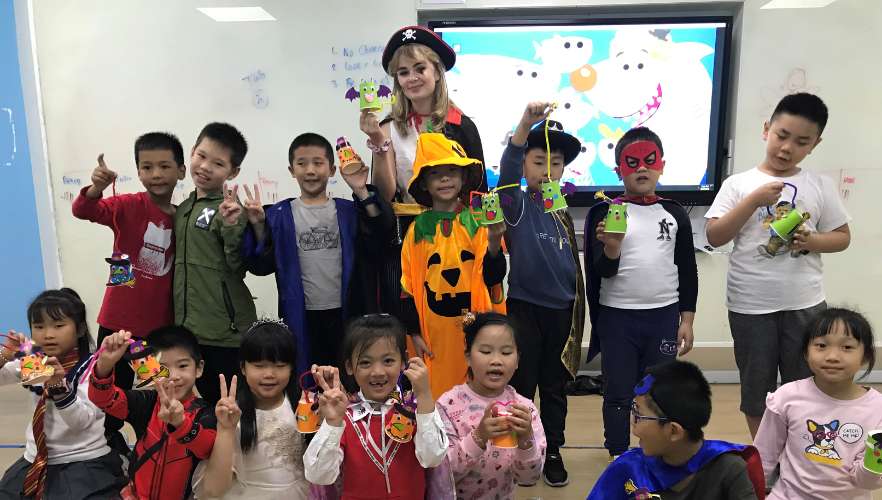
How can I incorporate it into my TEFL classroom?
Great question! It’s always fun to be able to celebrate festivals and key dates with your students, and Halloween is an easy one to incorporate into the TEFL classroom, as you can use stories, games, dress-up, and decorations.
Check out the British Council website for a great Halloween lesson plan – Halloween | TeachingEnglish | British Council | BBC – and ESLGames.com for some brilliant activities and games – Halloween Activities (eslgames.com).
Do you celebrate Halloween in your home country? If not, give it a try this year! And if you want to be able to share it with your students, but aren’t TEFL qualified yet, we can help you there! Take our quick 2-minute quiz to find out your perfect TEFL course match!
Have questions? Or want to speak to someone before you book? Arrange for a free call back with one of our TEFL experts, who will be happy to help!
Winter celebrations around the world
Winter celebrations are the best! As the cold creeps in and the dark nights are getting earlier (in the Northern Hemisphere anyway), safe to say we all need a bit of cheering up. And what better way to cheer yourself up, than with a fun and festive celebration?
Different countries and cultures around the world have different traditions and celebrations in the winter months, so you have lots to choose from and enjoy. We have listed some of the most popular ones below, so get stuck in and warm up your winter (or liven up the next few months if you’re in South Africa, Australia, or New Zealand, as you’re probably already warm enough – lucky you!)
Diwali/Deepavali
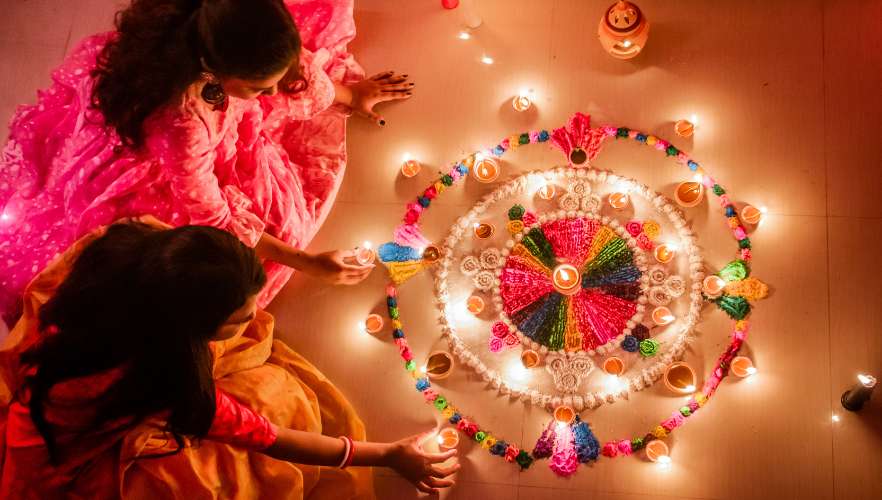
Although it’s already been and gone this year, it’s a beautiful celebration and well worth remembering for next year. The word Deepavali (from Sanskrit) means “row of lighted lamps”, and this is why it is often known as the festival of light! It’s a 5-day holiday that is celebrated by Hindus, Sikhs, and Jains around the world, with each religion assigning a different historical event or story to the celebration.
For those that celebrate, it represents new beginnings and the triumph of good over evil and light over darkness – a very cheering concept!
Many of those that observe this holiday will use lights and oil lamps to mark the occasion (either on the street or in houses) and it’s usually celebrated with a combination of family, feasting, and fireworks.
The dates of celebration change each year but are usually in October or November.
Bodhi Day
This is a Buddhist holiday that is celebrated on the 8th of December each year, more commonly in countries with a strong Buddhist presence, such as China, Japan, South Korea, and Vietnam.
It commemorates the day that they believe Gautami Buddha, the founder of Buddhism, reached enlightenment while meditating under a Bodhi tree, and is traditionally a day of quiet reflection, so meditation and prayer are usually practised. Performing acts of kindness towards others is also encouraged – which sounds lovely.
St. Lucia Day
This is a Christian holiday that is mainly observed in Italy, Sweden, and Norway on the 13th of December each year. It celebrates St. Lucia, who is believed to have brought food and aid to Christians hiding in the Roman catacombs, wearing a candlelit wreath on her head, before being killed by the Romans for her religious beliefs.
Traditionally the eldest daughter in the family will serve coffee and baked goods to the rest of the family in the home, to represent St. Lucia feeding the Christians in the catacombs.
In Sweden and Norway, each town will also usually elect a person to represent St. Lucia in a procession that goes through the streets. Children tend to wear white outfits, with girls having lighted wreaths on their heads, and everyone sings traditional songs. It represents bringing hope and light to the darkest months of the year and is seen as the beginning of Christmas celebrations.
Hannukah/Chanukah
Another celebration known as the festival of lights, Hannukah is a Jewish holiday that takes places over 8 days in November or December each year. Hannukah comes from the word Chanukah, which means dedication in Hebrew.
During the celebration, a special candle holder with 8 branches, called a Menorah, is used. A different candle on the Menorah is lit each day of the celebration and the 8 days symbolise the story that one days’ worth of oil kept the lights burning for 8 days in a Jewish temple in ancient times, after the Jewish community had won back the right to practice their religion freely.
Traditionally, families exchange gifts, share traditional foods and games, and exchange chocolate coins to increase happiness – well it would work for us!

Winter Solstice
This was originally a pagan celebration and is one of the oldest winter celebrations in the world, marking the official start of winter (as it’s the longest night, in the Northern Hemisphere, and the shortest day). There are lots of different versions of this celebration known by different names in other cultures (Yalda night-Iran, Inti Raymi-Peru, Dong Zhi-China) that are celebrated on a variety of different days, but all the celebrations share the same purpose.
The purpose is to celebrate the changing of the seasons, and the winter solstice represents regeneration and renewal, for those that observe it. Some people celebrate by eating traditionally ‘wintry’ foods, such as nuts, berries, root vegetables, and game meats (e.g. venison).
This winter celebration falls on the 21st of December each year.
Christmas
A traditionally Christian holiday, that celebrates the belief that Christ was born on 25th December, and is associated with going to church, helping those less fortunate than yourself, and sharing the day with family and friends.
It is now celebrated more widely around the world, with the Christmas ‘season’ running from the start of December to 1st January, and it’s more and more commonly celebrated without religious meaning. The non-religious version of Christmas involves the giving and exchanging of gifts, and, for children, is associated with Father Christmas/Santa Claus visiting on Christmas Eve to leave gifts under the Christmas tree or in a Christmas stocking.
A Christmas tree and lights are often used to decorate the home and it’s traditional to have a roast turkey dinner, and gather with family, on Christmas Day itself.

The Day of Goodwill
Started in 1994 in South Africa, The Day of Goodwill occurs on the 26th of December each year and the aim of the day is to give back to society. On this day many South Africans will donate food or goods to those less fortunate than themselves.
It’s about moving away from the more materialistic aspects of some modern holidays and enjoying the company of family and friends, while doing something good for your community.
Kwanzaa
Another relatively new celebration, as it was started in the 1960s by a professor of Africana studies at California State University, Maulana Karenga. Kwanzaa was created as a way to bring the African American community together – celebrating life as well as African cultures and values. It is primarily celebrated in the USA but is becoming more widely celebrated throughout the world.
The number 7 is important in Kwanzaa:
- There are 7 letters in the name
- Each of the 7 days of celebration are dedicated to one of 7 principles: unity(umoja), self-determination(kujichagulia), collective responsibility(ujima), cooperative economics(ujamaa), purpose(nia), creativity(kuumba) and faith(imani)
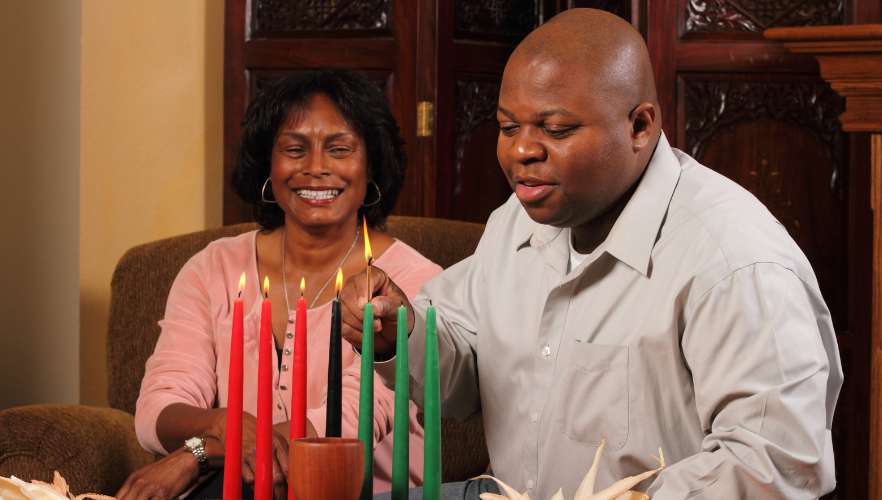
- There are 7 symbols of the holiday: fruits, veg and nuts; a straw mat; a candleholder; ears of corn; gifts; a communal cup signifying unity; 7 candles in red, green, and black.
Throughout the 7 days, African American families and communities come together to engage in activities based around the 7 principles, including storytelling, singing, dancing, and cooking. On the last evening (Dec 31st) it’s traditional to hold a communal feast called Karamu.
This celebration begins on the 26th of December and ends on the 1st of January.
New Year’s Day
For those that follow the Gregorian calendar (hint: this is followed by many countries in the world, so it might be you!) New Year’s Day is celebrated on 1st January each year. It is usually preceded by a New Year’s Eve party, on 31st December, where people traditionally gather with friends and family to ‘see in the New Year’ together, waiting for the countdown to midnight to be able to wish each other a ‘Happy New Year’ the moment it becomes 1st January.
There are lots of different ways countries celebrate the New Year at midnight, including:
- Setting off fireworks – USA, Canada, UK, Australia, New Zealand, South Africa, Ireland, and many more
- Eating 12 grapes, one with each ‘bong’ of the clock (marking midnight), and if you manage to eat all 12, you will have good luck for the rest of the year – Spain
- Making a man out of straw and old clothes, that represents the old year with all its faults, and burning it to start the New Year afresh – Ecuador
- Visiting a shrine or a temple after a feast at 11pm – Japan
Three Kings Day
A Catholic holiday that occurs on 6th January each year, this celebrates the three kings (aka. three wise men) who, according to the bible, brought gifts of gold, frankincense, and myrrh to the baby Jesus in Bethlehem.
It is celebrated in different countries throughout the world but, most prominently, in countries with high concentrations of Catholics, such as Mexico or Spain.
In Mexico, children leave their shoes by their front door for the kings to leave presents in, and in Spain families exchange gifts and gather to eat a rosca de reyes, which is a circular sweet bread that represents the crowns of the kings and has a hidden figurine of the baby Jesus inside. The person that gets the piece with the figurine inside is expected to host a party on 2nd February that year!
Chinese New Year
Also known as ‘Lunar New Year’, as it is based on the lunar calendar, this event is celebrated primarily in China and involves welcoming in the New Year, and the spring season, by cleaning the home, performing prayers and rituals, and feasting with family and friends.
It is traditional to eat extremely long noodles for Chinese New Year, as they are thought to symbolise long life, and receive gifts of money from relatives in red envelopes, to encourage good luck and wealth for the year ahead.
Each new year also comes with a new animal (12 in total – based on the Chinese Zodiac) and the animals bring different expectations for each year. For example, in China it is often common to experience baby booms in the year of the Dragon, as this is considered the most auspicious zodiac animal and is believed to bring strength and good luck to those born under it. Births in the year of the sheep tend to be avoided, as the sheep is considered a less prosperous animal and it is believed that children born under this zodiac will have a lifetime of bad luck.
The date of celebration changes each year, but it usually falls in either January or February.
Want to figure out your own zodiac sign, to see if you’re in for a lifetime of good luck or bad? Click here.

Nyepi
This is the Balinese New Year (according to the Balinese Saka calendar) and it’s celebrated towards the end of the winter season.
The word Nyepi means ‘to keep silent’ and it is a day of complete quiet on the island of Bali, where all lights are turned off during the hours of darkness and nothing noisy is permitted. People are expected to rest, meditate, and reflect in their homes – no transport (e.g. planes or cars), electronics (e.g. x-box or phones), or work (e.g. shops and restaurants) allowed! The island comes to a complete standstill and is extremely peaceful.
However, this day of complete calm is preceded by one of the noisiest evenings ever! There will be massive processions through the streets in the evening, with loud music, dancing, and large Ogoh-Ogoh (frightening papier-maché creations) which are taken to a central location and burned, to banish evil spirits that have come to the island over the last year.
It’s an amazing experience but, to catch it, you’ll have to make sure you’re there in plenty of time, before the transport shuts down!

However you choose to celebrate, we hope you have a magical winter and enjoy yourself!
Feel like we’ve missed an important celebration off our list? Get in touch via our Facebook or Instagram and we’ll try to add on as many as we can!
Want a way to get out there and experience these celebrations for yourself? Then, get TEFL qualified! Once you are, you’ll be able to travel and earn to your heart’s content, and get a chance to see all these amazing celebrations in person.
Teaching English Online: No Degree? No Problem!
Want to TEFL online without a degree? Online English teaching has become a lucrative and flexible way to earn a living. Many people teach from home full-time, while others use it as a side hustle to fill gaps in their timetable and earn additional income. However, many online platforms require applicants to hold a bachelor’s degree, something which can rule out a lot of potential teachers. But fear not! I’ve got some top tips to help you launch your online teaching career without a degree.
1. Get TEFL-Certified
Some online teaching platforms, such as Twenix, don’t require their teachers to hold a degree or be TEFL-certified. However, to really stand out from the crowd during the selection process a TEFL certificate like the ones on offer at i-to-i can really help.
A TEFL course will give you the skills and knowledge to really help your students reach their language learning goals, something that will ultimately be reflected in your teacher ratings and earning potential.
During the application process for many companies, you’ll be required to record a demo video of you “teaching” a class. Being able to show an understanding of sound principles of language learning on your tape will really give you a leg-up over other candidates.

2. Be Fluent in English
Twenix is one of a number of online teaching platforms that hires teachers from English and non-English speaking countries. I mean, at the end of the day, what matters more important? Where you were born or how well you develop your students’ English language skills? That being said, TEFL teachers from non-English speaking countries are expected to speak and write at a fluent level. So, make sure your English skills are on point before applying.
3. Leverage Your Relevant Experience
It’s the classic catch-22 situation! You’ve got your TEFL certificate, but no experience and all the job ads say “minimum 1 year’s experience required”; so, what do you do? Well, think carefully about your work experience. I’m sure you’ve got some of the relevant soft skills to make an excellent teacher. Think about times when you’ve mentored someone or given feedback, led a meeting or given a presentation, listened to and empathised with a friend or colleague. A big chunk of being a good TEFL teacher is being an empathetic, supportive, and encouraging presence in the classroom.
And don’t just stop with the soft skills. Teaching business English or English for specific purposes, such as medicine or law, can be very lucrative niches for the online TEFL teacher/entrepreneur. So, if you’re transitioning into English teaching from another sector, be sure to highlight your experience in your CV. For example, at Twenix, all of our students are adult professionals working in sectors as diverse as health insurance, logistics, the film industry and IT. So, all that knowledge and vocabulary you’ve built up in your previous career might be a very valuable string to your bow.

4. Do Your Homework
It’s important make sure that you fulfil the job requirements before applying for the online teaching role. Some companies, for example, will only hire teachers who hold passports from specific English-speaking countries. So, make sure you check these restrictions carefully before putting all the effort into preparing your application.
Also, read the small print about what each company requires of their teachers. On some platforms you are required to teach a minimum number of hours a week. While with others you’re not paid for your first class with a new student.
Another thing to consider is the type of platform the company offers. Some platforms are open marketplaces where teachers are required to set their prices and market themselves to get students and classes. On other platforms, such as Twenix, teachers are automatically matched with students based purely on their availability. You just open up slots in your timetable when you want to teach and the system will pair you with students who want to do classes at those times.
5. Tailor Your Application
As with all jobs, it’s important to tailor your application to the specific company. At Twenix, for example, as I mentioned, all the students are adults, so, as great as your puppet theatre rendition of “Old McDonald” might be, it’s not really what they’re looking for! Try to get as much information as you can on the profile of the learners you’re likely to be teaching so that you can show how good a fit you would be. Remember that the recruitment departments in these companies process 1000s of video applications a week, so make sure you read the brief carefully and choose the appropriate tone.
6. Get the Right Kit
To teach online you’re going to need: a stable internet connection, a good quality webcam, a microphone and fast Wi-Fi. Most decent new laptops should do the job, just make sure you’re not being let down by faulty or decrepit hardware!

7. Be Patient & Look After Yourself
Getting a job in the first place might take some time; the application process for most platforms consists of several stages. Also, if you do choose to go with a “marketplace” provider, it’ll take time and effort to build up a solid student base and a good average rating.
It’s also important not to run before you can walk. If you’re new to teaching, don’t bite off more than you can chew by taking on too many classes. Even if an online class is only an hour long, it’s an intense hour of constant concentration, which can be particularly draining. If you can afford to, start off small with 10-12 hours a week and see how well you handle it. Balancing your prep time, correcting homework and actually teaching the classes can be tricky in the beginning so be kind to yourself. Think of it like weight training, start light and build up gradually until you find a rhythm and a workload that suits you.
8. Consider Working for Twenix!
If you’re looking for full time teaching work, or just a side hustle, Twenix could be an excellent option. Here are some things that set us apart from some of our competitors:
- Ultra-flexible schedule: You choose exactly how much or how little you want to teach; just open up time slots when you’re available and we’ll match you with students.
- Class transfer policy: What if something comes up and you can’t teach a class for whatever reason? At Twenix you can transfer your classes to other available teachers with no penalties.
- Earn from day one: Once you’re onboarded and activated on the platform you can start earning right away; no need to set up a profile or market yourself to students. Just log on and teach.
- Adult students: Don’t fancy teaching a class full of screaming kids or moody teenagers? With Twenix there’s no need to worry; all of our students are adult professionals from Spain and Italy.
- No prep, no marking: Twenix provides you with all the lesson materials you’ll need for class. They’re designed so that you’ll only need 2-3 minutes before class to read over the lesson plan before teaching it. Also, you don’t need to set or mark any homework! Just focus on teaching.
- Open hiring policy: Unlike other platforms, we hire teachers from all over the world, no need to be a native speaker, hold a degree or a TEFL certificate. If you’ve got the passion for teaching and a willingness to learn, we want to hire you.
- Competitive rates: Our pay rates vary from country to country, for the US our hourly rate ranges from $13-$16. Also, the longer you work for us, the more you earn; your pay rate increases as you level up on the platform.
If working for Twenix sounds appealing, click here to find out more.