Mon-Thu 7am-9pm Fri 7am-10pm (GMT)
Home » TEFL Blog
The world’s leading TEFL provider: making storytellers since 1994!
To a lot of us, the words ‘summer camp’ are synonymous with American culture, wooden cabins in the forest and songs by the campfire (thanks in part to Hollywood classics like The Parent Trap and …
Who said TEFL is just for when you graduate? TEFLing Paul completed his EDI CertTEFL during the summer holidays then jetted off to teach English at a summer camp in Italy. We quizzed him to find …
Danny is one of our TEFL experts. He has taught in Italy, Japan, Poland and at a esl summer school in the UK, so it’s safe to say he knows his stuff. Summer schools are …
Africa
Asia
Europe
Middle East
South America
3 out of 4 millennials would rather buy an experience than something material. And from our experience, that usually means travel plans are brewing! A huge 20% of all international travellers are millennials - but …
Hi, there! I'm Catherine and I work in the Marketing Team at i-to-i HQ. In August this year, along with two of my lovely colleagues from our team of TEFL Experts, Becky and Emma, I travelled …
Alex took part in our TEFL Course & Internship: Thailand Volunteer and documented his experience (thanks, Alex!). Including meeting elephants, getting stuck into delicious Thai food and visiting Erawan waterfalls - it's safe to say …
Your TEFL course will teach you how to create amazing lesson plans, fun-filled activities, and engaging content, but you might still feel a little nervous about teaching your first online English lesson - don't worry, …
Considering a career in teaching English, but worried about the stress that comes with a traditional classroom setting? You're not alone. While Teaching English as a Foreign Language (TEFL) can be incredibly rewarding, the classroom …
Want to TEFL online without a degree? Online English teaching has become a lucrative and flexible way to earn a living. Many people teach from home full-time, while others use it as a side hustle …
Imagine having a full time career in your home country, while also being able to boost your income by teaching students from all over the world. Sound appealing? Well, TEFL teacher Tabitha thinks it's great! …
Do you want to teach English online? Are you wondering about how to get started, how long it takes to find a TEFL job or even if you can combine online TEFL with another role? …
Are you wondering what’s going on in the world of TEFL? TEFL jobs expert, Jordan, has been keeping track of the latest developments and went live on i-to-i’s Facebook page to share his knowledge on …
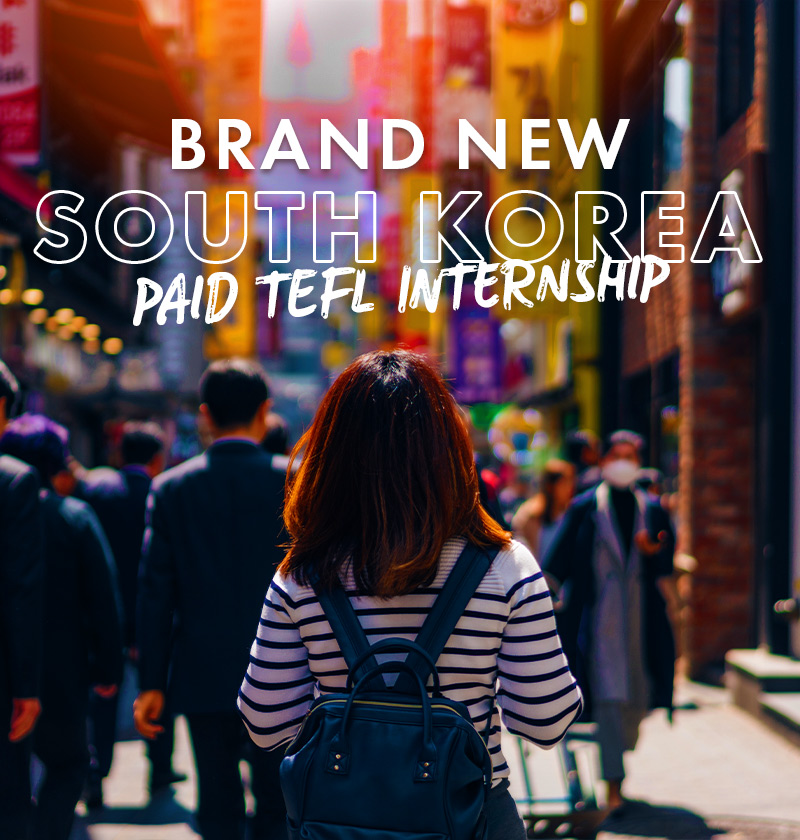
Our highest ever paid TEFL internship is here! Get ready to spend 12 unforgettable months on our South Korea TEFL Internship as you kickstart your TEFL Career. From Daegu to Daejeon, we’ve got some amazing …
Happy Valentine’s Day! Whether you’ve got a romantic day with your significant other planned or are going to paint the town red with a group of friends, Valentine’s Day reminds us to think about the people, …
One of our fantastic expert advisers, Rob, taught in Thailand for nearly two years. After returning back he loved TEFLing so much he decided to get a job working for i-to-i; so it only seems …
Want that tingly just-booked-a-trip feeling? Find travel and teaching inspo right here!
If you’re from a country that celebrates Christmas you’ll know how much of a big deal the festive season can be; and what better way to teach your students about the culture you come from …
Christmas means something different to everyone – for some it’s time to spend quality time with family, for others it’s a welcome break from work or just an excuse to step up to the challenge …
First off, let's clear up what EPIK actually is! EPIK stands for the English Program in Korea (EPIK) and it was developed in the 90s to help improve the spoken English skills of South Korean …
One of the biggest misconceptions we hear time and time again here at i-to-i is that “TEFL is only suitable for young adults/students whilst they are travelling the world on a gap year”. Although many …
South Korea is a truly fascinating country, and we defy anyone to spend time there and not fall in love with it! And, just as with people, where it’s the crazy quirks that you fall in …
France is perhaps the quintessential country of the world for the best in food, wine and romance, drawing in tourists for hundreds of years, revered for being home to many of the finer things in …